
|
" Do not follow where the path may lead. Go instead where there is no path and leave a trail." Ralph Waldo Emerson | |
 |

|
| Cancer |
|
|
" Do not follow where the path may lead. Go instead where there is no path and leave a trail." Ralph Waldo Emerson | |
|
|



















 |
 |
 | |
 | |
 | |
 |
 |
 |
 |
 |
 |
 |
 |
 |
 |
 | |
 | |
 |
 |
 |

 |
 |
 |
 |
 |
 |
 |
 |
 |
 |
 |
 |
| Cancer | CORPORATE PROFILE Corporate Profile click here Mediscience Technology Corp. is principally engaged in the design and development of diagnostic medical devices that detect cancer using light induced native tissue fluorescence spectroscopy to distinguish between malignant and normal or benign tissue. Address: The Corporate Officers: To access the SEC Reports for Mediscience Technology Corp. click here. Peter Katevatis Esq., Chairman and CEO click here Prof. Robert R. Alfano, Ph.D. Distinguished Professor of Science and Engineering, CCNY. Chairman of scientific advisory board. click here Peter Katevatis Esq., Chairman and CEO
Related Papers By Prof. Alfano click here Sarbanes Compliance Board Committees The Board of Directors has six structured standing committees: Audit Committee, Committee on Corporate Governance, Compensation and Benefits Committee, Executive Committee, Finance Committee, and Committee on Public Policy and Social Responsibility. Members of the individual committees are named below:
The Audit Committee, comprised of independent directors, is governed by a Board approved charter that contains, the Committee's membership requirements and responsibilities. The Audit Committee oversees Company accounting, financial reporting process, internal controls and audits, consults with management, the internal auditors and the independent public accountants on, matters related to the annual audit, the published financial statements and the accounting principles applied. The Audit Committee appoints, evaluates and retains the Company's independent public accountants. It maintains direct responsibility for the compensation, termination and oversight of the Company's independent public accountants and evaluates the independent public accountants' qualifications, performance and independence. It approves all services provided to the Company by the independent public accountants and reviews all non-attest services to ensure they are permitted under current law. The Committee monitors compliance with the Foreign Corrupt Practices Act and Company's policies on ethical business practices and reports to the Board. It will establish policies and procedures for the pre-approval of services provided by the independent public accountants. The Audit Committee will establish procedures for the receipt, retention and treatment, on a confidential basis, of complaints received by the Company, including the Board and the Audit Committee, regarding accounting, internal accounting controls or auditing matters, and the confidential, anonymous submissions by employees regarding questionable accounting or auditing matters. The Audit Committee's Report is included on page 28 of this information statement. Its Charter is is available on the Company's website. MEDEISCIENCETECH.com Financial Expert on Audit Committee: The Board has determined that John Kennedy who currently is President CEO and Chief Financial Officer of PEPCO Corporation, and who previously was the chairman of the audit committee of Peoples Bank of NJ, is the audit committee financial expert. The Board made a qualitative assessment of John Kennedy's level of knowledge and experience based on a number of factors, including his education and experience. The Committee on Corporate Governance, is comprised of independent directors, considers and makes recommendations on matters related to the practices, policies and procedures of the Board and takes a leadership role in shaping the corporate governance of the Company. As part of its duties, the Committee assesses the size, structure and composition of the Board and Board Committees . The Committee also acts as a screening and nominating committee for candidates considered for election to the Board. In this capacity it concerns itself with the composition of the Board with respect to depth of experience, balance of professional interests, required expertise and other factors, and evaluates prospective nominees identified by the Committee on its own initiative or referred to it by other Board members, management, stockholders or external sources. The Compensation and Benefits Committee, which is comprised of independent directors, consults generally with management on matters concerning executive compensation and on pension, savings and welfare benefit plans where Board or stockholder action is or may be contemplated with respect to the adoption of or amendments to such plans. It makes recommendations to the Board of Directors on compensation generally, executive officer salaries, bonus awards and stock option grants, special awards and supplemental compensation. The Committee makes recommendations on organization, succession, the election of officers, consultantships and similar matters. The Executive Committee acts for the Board of Directors when formal Board action is required between meetings in connection with matters already approved in principle by the full Board or to fulfill the formal duties of the Board. The Finance Committee, which is comprised of independent directors, considers and makes recommendations on matters related to the financial affairs and policies of the Company, including capital structure issues, dividend policy, investment and debt policies, asset and portfolio management and financial transactions, all as necessary. The Committee on Public Policy and Social Responsibility, which is comprised of independent directors, advises the Board of Directors and management on Company policies and practices that pertain to the Company's responsibilities as a global corporate citizen, its obligations as a Bio-Medical company whose products and services affect health and quality of life around the world. Board and Board Committee Meetings In 2003, the Board of Directors met 2 times. Board committees met as follows during 2003: Committee on Corporate Governance, 2 times; Audit Committee 4 times with auditors; Compensation and Benefits Committee, 1 time; Committee on Public Policy and Social Responsibility, 0 time; and Finance Committee, 4. No meetings of the Executive Committee were held in 2003. All incumbent directors attended 90 percent of the meetings of the Board and of the committees on which they served. The Chairpersons of the Audit Committee, the Committee on Corporate Governance, and the Compensation and Benefits Committee will each participate in any future executive session. Compensation Committee Interlocks and Insider Participation NONE Independence of Directors The Board of Directors has determined that to be considered independent, an outside director may not have a direct or indirect material relationship with the Company. A material relationship is one which impairs or inhibits-or has the potential to impair or inhibit-a director's exercise of critical and disinterested judgment on behalf of the Company and its stockholders. In determining whether a material relationship exists. The Board consults with the Company's counsel to ensure that the Board's determinations are consistent with all relevant securities and other laws, recent relevant cases and regulations regarding the definition of "independent director," "business judgment" including those set forth in listing standards of the New York Stock Exchange as in effect from time to time. Consistent with these considerations, the Board affirmatively has determined that all directors are independent directors except Mr. Michael Engelhart, and Peter Katevatis Esq. who are Company contracted employees. (see below)Relationships with Outside Firms Peter Katevatis Esq..is a director of the Company and in 2003 was the President and Chief Executive Officer. Peter Katevatis esq. PC., provided legal services to the Company during 2003 (see Excecutive and other compensation) Michael Engelhart President COO is a director of the Company and in 2003 by agreement also the company's investment manager. Mr. Engelhart is President/CEO of THMGROUP LLC, Ramsey NJ see SEC EDGAR 8-K Report January 22. 2003 "On January 13, 2003 Mediscience Technology Corp. entered into an agreement with THMGROUP of Ramsey NJ as exclusive advisor to explore commercialization of Registrants technology applications.". Board's Role in Strategic Planning The Board of Directors has the legal responsibility for overseeing the affairs of the Company and, thus, an obligation to keep informed about the Company's business and strategies. This enables the Board to provide guidance to management in formulating and developing plans and to exercise independently its decision-making authority. Acting as a full Board and through the Board's standing committees (Audit, Committee on Corporate Governance, Compensation and Benefits, Executive, Finance, and Committee on Public Policy and Social Responsibility), the Board is fully involved in the Company's strategic planning process. At subsequent Board meetings, the Board continues to substantively review the Company's progress against its strategic plans and to exercise oversight and decision-making authority regarding strategic areas of importance and associated funding needs. For example, the Board typically reviews the Company's overall quarterly and annual performance and considers the operating budget and capital needs. Board meetings also target specific strategies important to the Company e.g funding needs, RFCUNY research and FDA issues. The role that the Board plays is inextricably linked to the development and review of the Company's future. Through these procedures, the Board, consistent with good corporate governance, encourages the long-term success of the Company by exercising sound and independent "business judgment" on the strategic issues that are important to the Company's business. MEDISCIENCE CODE OF ETHICS subscribed to by all Officers and Directors Purpose: written standards designed to defer wrongdoing and to promote honesty and ethical conduct at all times material to the best interests of our shareholders and the investment public.
Any change to or a waiver of the above code of ethics will be reported within 5 business days either on an 8-K filing or a posting of notice on the Company's web site medisciencetech.com as required under present SEC guidelines. Compensation of Directors: No Director of the Company presently receives any compensation for serving on the board. Compensation and Benefits committee Report on TOTAL Executive Compensation The Compensation and Benefits Committee of the Board (the "Committee") approves compensation objectives and policies for all employees and sets compensation for the Company's executive officers, including the individuals named in the Summary Compensation Table. The Committee is comprised entirely of independent directors. Objectives and Policies The Committee seeks to ensure that:
The Committee applies these objectives and policies through the broad and deep availability of both performance-based cash incentives and stock option grants. Further, consistent with the long-term focus inherent within the Company's R&D-based business, it is the policy of the Committee to make a high proportion of executive officer compensation dependent on long-term performance and on enhancing stockholder value. |
||||||||||||||||||||||
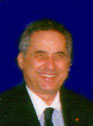 Peter Katevatis has served as
Chairman of the Board of Directors since 1993.
He is a practicing attorney admitted to the Pennsylvania, New York, New
Jersey and the Washington DC bar associations. Mr. Katevatis served as
fiduciary trustee of the New Jersey Police and Firemans Fund and as a member
of the New Jersey State Investment Council from 1990 to December 1993. In
that capacity he participating in the fiduciary investment and oversight of
all New Jersey state pension funds totaling approximately 50 Billion dollars.
He serves as a judicial arbitrator for the American Arbitration Association
and the National Association of Securities Dealers (NASD). Mr. Katevatis is
also long-time member of the National District Attorney's Association.
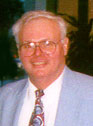 Dr. Alfano received his Ph.D. degree in Physics from New York University in 1972. He
was a Research Staff Scientist at GTE Research Laboratory from 1964 to 1972. In 1972
he joined the Physics Department at The City College of CUNY as an Assistant Professor.
Currently a Distinguished Professor of Science and Engineering, he serves as Director
of the Institute for Ultrafast Spectroscopy and Lasers. He also serves as Director for
the New York State Center of Advanced Technology for Ultrafast Photonic Materials and
Applications; the NASA Institutional Research Program, and the DOE Center of Excellence
for Laser Imaging in Medicine. Over the last twenty five years, he has published over
600 technical papers and has received 63 patents in the areas of laser spectroscopy,
nonlinear optics, semiconductors, photosynthesis, medi-photonics, and optical imaging.
For the past ten years, he has generated about $1M/yr. in research grants from NSF,
NIH, AFOSR, ONR, NASA, ARO, Mediscience Technology, and other sources. He is a fellow
of both the American Physical Society, and the Optical Society of America.